
Better HR outcomes start with better Metrics.
Understanding the right HR metrics is the first step towards smarter “ People Decisions”.
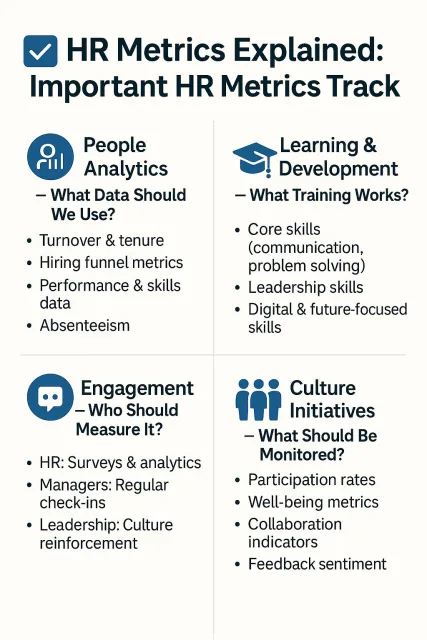
HR metrics are powerful only when we understand what to track and why it matters. Here are four essential areas where data helps HR drive real impact.
People Analytics. Use data such as turnover patterns, time-to-fill, performance trends, internal mobility, and skills inventory to understand workforce health and make better strategic decisions.
Employee Engagement. Engagement is best measured by combining survey insights, manager check-ins, peer feedback, and behavioral indicators (like participation in initiatives). Consistent communication from managers and HR is key to understanding employee sentiment.
Learning & Development. Track the adoption of training programs, skills gained, certifications earned, and how training impacts performance. Focus on programs that build future skills: leadership, digital literacy, communication, problem solving, and role-specific capabilities.
Culture Initiatives. Monitor participation in culture programs, pulse survey feedback, collaboration scores, and well-being indicators. This helps HR understand which initiatives strengthen belonging, teamwork, and psychological safety.
HR becomes truly strategic when data turns into actionable insights.
What HR metric do you think organizations overlook the most?
WorthPrime Tax Legal and Compliance Services Inc Brain Expansion Group.
Disclaimer: This content is for general informational purposes only and does not constitute tax, legal, or accounting advice. Tax rules and filing requirements depend on individual circumstances and applicable law. Consult a qualified professional regarding your situation.